Published on Oct. 20, 2026
Prevention of Floor Eggs in Breeder and Commercial Layer Flocks
Floor eggs remain one of the most significant challenges in modern cage-free breeder and commercial layer production systems. Eggs laid outside designated nests are associated with increased contamination risk, lower hatchability, reduced chick quality, greater labor costs, and substantial economic losses. While genetics and housing technology have evolved considerably, floor egg incidence continues to vary widely among farms, highlighting the critical role of management and bird behavior.
Successful prevention depends on understanding the biological needs of the laying hen and creating an environment where nests are clearly more attractive than any alternative laying site. This article integrates current scientific understanding with practical field recommendations to provide a comprehensive strategy for preventing floor and system eggs in breeder and layer operations.
Why Floor Eggs Matter
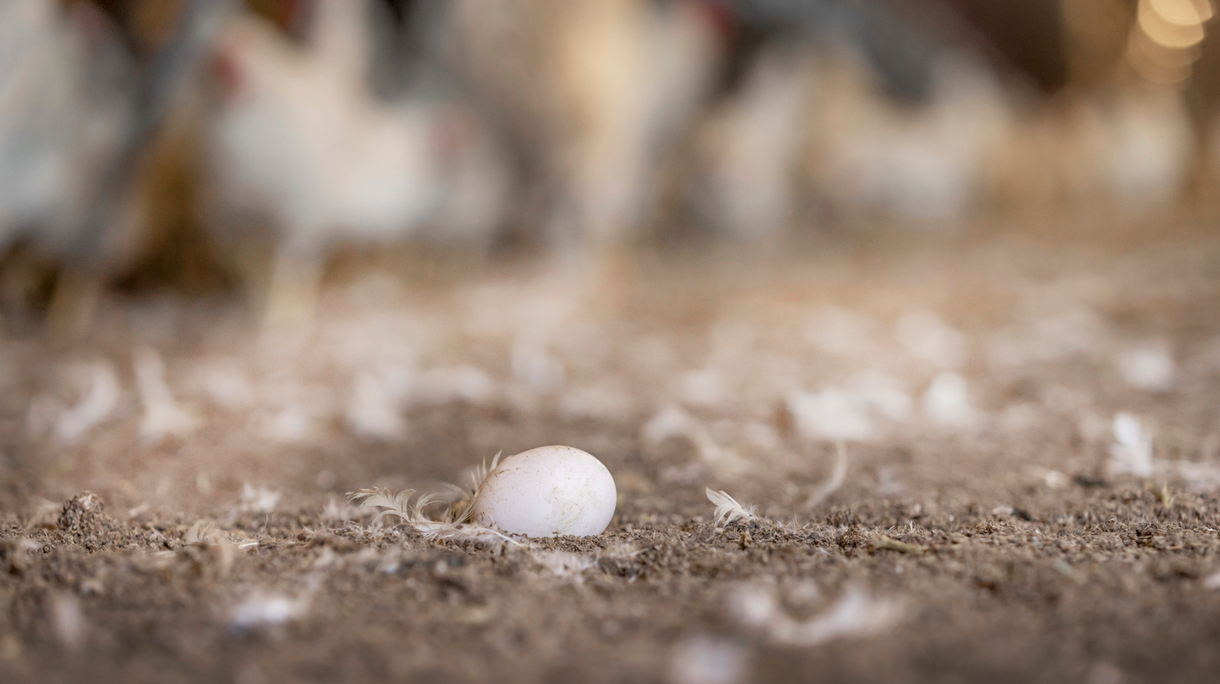
Floor eggs are more than a simple production nuisance. In breeder operations, eggs laid on litter, slats, or system structures are exposed to manure, dust, and environmental pathogens. As a result, they often exhibit reduced incubation performance and poorer chick quality. In commercial egg production, floor eggs frequently require downgrading or diversion to processing due to shell contamination and increased breakage risk. Additional labor for collection further increases production costs.
From both welfare and economic perspectives, floor egg levels should remain as low as possible. Although higher percentages are common during the first weeks of production, persistent levels above 2 to 3% generally indicate management deficiencies requiring corrective action.
Importantly, floor laying tends to become a learned behavior. Once hens establish a preference for laying outside nests, correction becomes increasingly difficult. Consequently, prevention during the onset of lay is far more effective than attempting to solve the problem later in the production cycle.
Understanding Hen Nesting Behavior
Effective floor egg prevention starts with understanding the hen's natural nesting instinct. Approximately 30 minutes to two hours before oviposition, hens enter a pre-laying phase characterized by increased activity, nest searching, site selection, and nest-building behavior. This period is hormonally driven and represents a strong biological motivation to locate a suitable laying site.
During this process, hens seek locations that are dark, protected, comfortable, quiet, and easy to access. Research shows that birds may inspect numerous potential sites before making a final decision. Once a preference develops, that behavior tends to remain remarkably consistent throughout life.
This behavioral pattern explains why disturbances during pre-lay activity can dramatically increase floor egg incidence. If birds are interrupted while searching for a nest, they may abandon the search and lay wherever they happen to be at that moment. Feed delivery, staff movement, equipment noise, or egg belt operation during peak laying periods can therefore contribute directly to increased floor laying.
The Critical Importance of Rearing
Many floor egg problems originate long before the laying period begins. The quality of rearing is one of the strongest predictors of future nest use.
Pullets raised in environments containing perches, elevated platforms, and opportunities for vertical movement adapt more successfully to complex laying systems than birds reared exclusively on the floor. Early exposure to three-dimensional environments improves confidence, navigation skills, and movement throughout the production house.
Perches should ideally be installed before four weeks of age to promote natural roosting behavior and locomotor development. Furthermore, the rearing system should resemble the future production environment as closely as possible. Similarity between rearing and laying facilities reduces adaptation stress and lowers the risk of floor egg development.
Equally important is timely transfer. Birds should enter the laying facility well before the onset of sexual maturity [SS1] to allow exploration and familiarization with nests, feeders, drinkers, and perches. Early transfer reduces the risk of hens beginning lay in the rearing facility, a behavior that can later translate into floor laying in production houses.
Nest Attractiveness: Making the Nest the Best Place to Lay
A fundamental principle of floor egg prevention is that the nest must be the most attractive laying location in the house.
Hens naturally compare available options. If litter, corners, shaded areas, or system structures provide conditions that appear safer or more comfortable than the nest, birds may choose these alternatives for laying. Therefore, nest design and maintenance are critical.
An attractive nest should be:
- Clean and free from manure
- Free of broken eggs
- Comfortable
- Properly ventilated
- Quiet and protected
- Darker than surrounding activity areas
- Easy to access
Damaged nest mats, worn curtains, excessive noise, retained eggs, or poor sanitation can reduce nest attractiveness and encourage alternative laying locations. Regular maintenance is therefore essential.
Nest availability is equally important. Recommended stocking densities include approximately one square meter of communal nest space per 100 to 120 hens or one individual nest per 5 to 6 hens. Overcrowding restricts access and increases the likelihood that subordinate birds will lay elsewhere.
Light Management: One of the Most Powerful Tools
Among all environmental factors, lighting has perhaps the strongest influence on floor egg incidence.
The general objective is simple: activity areas should be bright and attractive, to encourage bird movement, whereas nest interiors should remain relatively dark. Uniform light distribution throughout the house prevents creation of shadowed areas that may attract nesting behavior. Birds are naturally drawn to dark, sheltered spaces for laying, making poorly illuminated corners common floor egg locations.
Several practical lighting recommendations emerge from field experience:
- Eliminate shadows beneath equipment and along walls.
- Replace broken bulbs immediately.
- Provide even light distribution throughout the house.
- Open nests before general lights switch on.
- Use nest lights for early-laying birds when appropriate.
- Avoid excessively bright nest lights.
- Use progressive light-off programs to encourage birds toward slats and nesting areas before roosting.
Where legislation allows it, a short light period during the night (for example 1h30 of light, 3 hours after “lights off”), will delay the lay of one part of the flock and reduce the competition for the nest. This will be more efficient if the number of birds per nest is high.
In case of early-laying birds, if floor eggs are found before lights on, adding one extra hour of light in the morning could solve a floor egg problem.
In aviary systems, lighting management becomes even more critical. Light intensity within the system should be similar to the rest of the house, minimizing attractive low-light zones where hens may choose to lay system eggs.
Environmental Comfort and Ventilation
Nests must provide a microenvironment that is more comfortable than surrounding areas. Ventilation therefore plays a significant but often underestimated role in nest acceptance.
During winter, nests should be protected from direct cold drafts. During warmer periods, sufficient airflow should prevent heat accumulation inside nests. Poor ventilation may cause birds to avoid otherwise well-designed nesting areas.
Airflow patterns should encourage occupation of slatted areas and nests while discouraging litter-based nesting sites. Maintaining a comfortable environment near nest entrances improves utilization and helps distribute hens more evenly throughout the house.
The Role of Equipment Layout
Equipment placement significantly affects bird movement and nest accessibility.
Feeders positioned too close to nests may create congestion and inhibit access. Conversely, drinkers located near nests can attract hens toward nesting areas and improve utilization. Equipment should never create physical barriers between hens and nest entrances.
Easy movement between litter and elevated areas is equally important. Slats should not be excessively high, and ramps or ladders should facilitate vertical movement. Birds that can comfortably access elevated areas are more likely to utilize nests and less likely to remain on the floor.
In aviary systems, encouraging birds to move freely between levels is essential. Strategic placement of feed and water can stimulate vertical movement and improve distribution throughout the structure. Additional perches may further enhance accessibility and reduce system egg production.
Managing Social Dynamics and Nest Competition
Young hens commonly display gregarious nesting behavior, preferring nests already occupied by other birds. This tendency can create overcrowding in specific nest locations despite adequate overall nest capacity. Dominant birds may exclude subordinates, forcing them to seek alternative laying sites.
To address these challenges, producers should:
- Promote uniform bird distribution.
- Use partitions for more even spread of the birds
- Install deflection barriers between nests where appropriate to decrease pressure in specific next boxes (usually close to partitions).
- Reduce attractiveness of corner nests relative to other locations.
- Monitor occupancy patterns regularly.
- Ensure adequate nest space throughout the facility.
Understanding where floor eggs are concentrated can provide valuable diagnostic information regarding bird flow, competition, and environmental preferences.
The First Six Weeks of Lay: The Window of Opportunity
Virtually all scientific literature and field experience identify the first four to six weeks of production as the critical period for floor egg prevention. During this window, hens establish long-term nesting habits.
Management intensity should be highest during this period. Key actions include:
- Frequent flock observations.
- Immediate collection of floor eggs.
- Gentle relocation of birds attempting to nest on the floor.
- Removal of birds from corners and hidden areas.
- Continuous encouragement of nest use.
Floor eggs should be collected several times daily. At the onset of lay, hourly collection may be necessary. An egg left on the floor acts as a powerful visual stimulus and encourages other hens to lay in the same location. During these early rounds, egg collection should be carried out calmly to avoid disturbing birds that are still occupying the nests.
Success during these first weeks often determines floor egg levels for the remainder of the flock's productive life.
Eliminating Alternative Nesting Sites
Even excellent nests cannot fully prevent floor eggs if attractive alternatives remain available.
Common problem areas include:
- House corners
- Areas beneath feeders
- Shaded locations
- Deep litter zones
- Spaces under equipment
- Sites adjacent to walls
Management should focus on making these areas less attractive while simultaneously enhancing nest appeal. Practical measures include litter management, regular manure removal, installation of deterrent barriers where permitted (i.e. approved electric fences on the internal perimeter wall), and elimination of shadows. Distribution of grit in litter areas can also discourage the formation of comfortable nesting depressions.

Preventing System Eggs in Aviaries
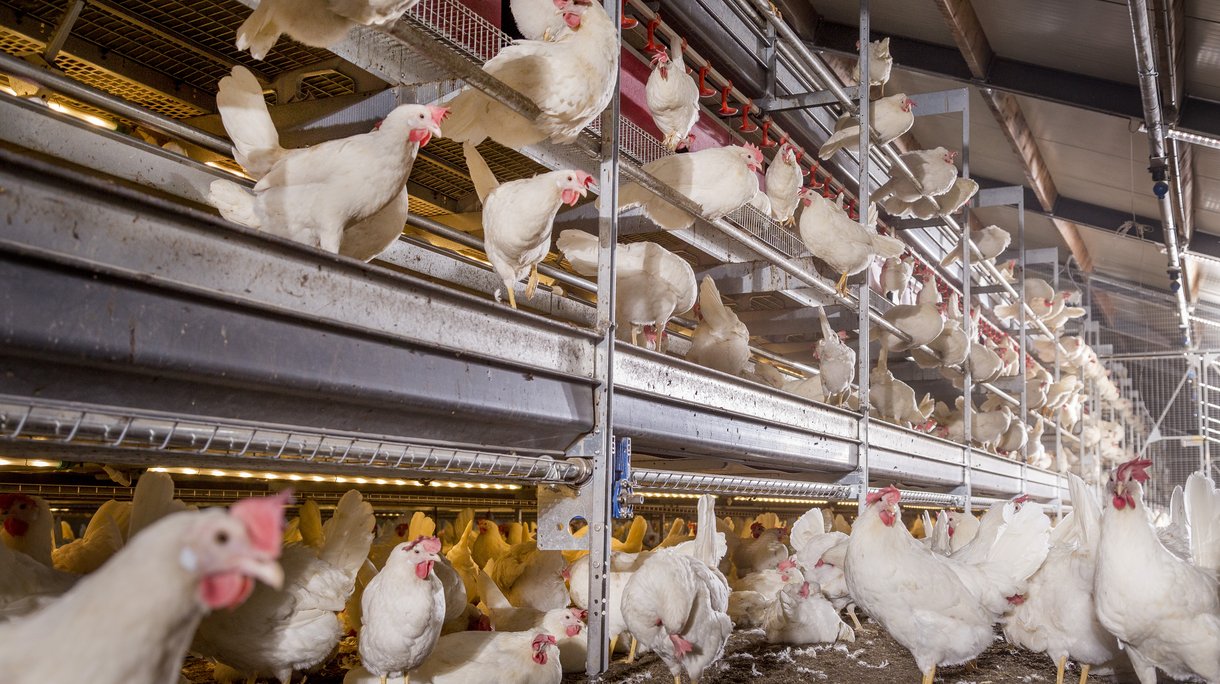
System eggs represent a specific challenge in aviary housing. These eggs can be laid on platforms, upper tiers, or internal system structures rather than in nests.
Prevention relies heavily on behavioral control through lighting and vertical movement management. Birds should be encouraged to perch as high as possible during the night, reducing morning crowding near nest entrances. Proper dimming programs and strategic lighting can support this objective.
When eggs appear on upper levels, birds are often reluctant to move downward. Additional perches and improved access routes can facilitate movement. Similarly, when system eggs occur on middle tiers, feed and water placement should be reviewed to ensure hens are encouraged toward nest locations during the laying period.
Routine recording of floor and system egg locations following management changes provides valuable information for identifying the underlying causes of mislaid eggs.
Conclusion
Floor eggs are fundamentally a behavioral and management challenge. Although housing design and equipment are important, the greatest determinants of success are rearing quality, environmental management, nest attractiveness, and stockmanship during the onset of lay. Prevention begins in the pullet house, continues through transfer and adaptation, and reaches its most critical phase during the first weeks of production.
The most successful operations consistently apply a few core principles: rear birds for vertical movement, transfer them before the onset of lay, provide attractive and accessible nests, maintain appropriate lighting and ventilation, eliminate alternative nesting sites, and manage the flock intensively during the first six weeks of production. When these practices are implemented together, floor and system eggs can be minimized, improving productivity, hatchability, welfare outcomes, and overall farm profitability.