Published on Jan. 5, 2026
Mitigating wet sticky droppings in alternative housing
Feather quality in laying hens is a key indicator of welfare and system hygiene, with cleanness directly influenced by manure consistency. Wet and sticky droppings compromise not only bird comfort and feather condition but also egg cleanliness and manure usability. This issue is particularly visible in white-feathered breeds, where contamination is more apparent. Addressing this challenge requires a multidisciplinary approach, integrating nutritional management, gut health, water quality, housing design, and operational practices.
Feather quality includes feather cleanliness; therefore, preventing wet and sticky droppings is essential. Wet and sticky droppings not only affect bird welfare and hygiene but also has commercial implications, as visibly dirty birds are less acceptable to consumers, can result in dirty eggs, or can lead to non-acceptance of manure at the biogas industry. Managing proper manure consistency is important for all laying hens, but manure contamination on white-feathered breeds is more noticeable.
The occurence of wet, sticky droppings presents a multifactorial challenge, involving many nutritional factors, such as water consumption, manure structure, water-holding capacity of manure, gut health, and feed composition. The daily intake of electrolytes, sodium (Na), potassium (K), and chloride (Cl), from both water and feed directly influences water consumption and the moisture content of droppings. Research shows that higher concentrations of potassium and sodium in feed increase both water intake and excreta moisture, leading to wetter droppings. Sodium is typically supplied via salt and sodium bicarbonate; potassium through soybean meal; and chlorine from salt and additives. Managing the balance and total intake of these electrolytes is crucial for controlling manure moisture. We recommend a sodium content of 180 mg/hen/day, with a chloride level of 170 – 260 mg/hen/day, depending on local situations. If sulphur-rich ingredients are being used, it is wise to take sulphur into account as well.
The water holding capacity of manure is affected by several nutritional and feed processing factors. Soluble fibers, such as arabinoxylan and β-glucan found in wheat and barley, increase gut viscosity and water intake, raising the risk of wet droppings and dirty eggs. The inclusion of NSP enzymes in diets containing wheat or barley can help mitigate these effects. Insoluble fiber levels should be adjusted according to the age and housing system of the birds, with a recommended minimum of 4.5%. Feed processing (including heat treatment, small particle size, and pelleting) can also affect the speed of digesta and viscosity. Coarse feed particles promote better gizzard development and digestive tract function, while excessively fine feed can lead to under-consumption and poor gizzard development. Therefore, we recommend that more than 75% of feed particles fall within the 1.0 and 3.2 mm range.
Dietary protein levels can affect digesta speed and viscosity both directly, through undigested protein, and indirectly, via increased potassium intake. High-protein diets increase water consumption, which can exacerbate the problem of wet droppings. Potassium, mainly originating via soya products, affects the dietary electrolyte balance.
Gut health is another critical factor, affecting feed absorption and water intake. Poor water quality and dysbacteriosis can increase water consumption and the incidence of wet droppings. Water parameters, including pH, ammonium, nitrite, nitrate, chloride, sodium, iron, manganese, sulphate, hardness, yeast, fungi, E. coli, and total germ count, should be regularly monitored and maintained within recommended ranges to support gut health and minimize wet droppings.
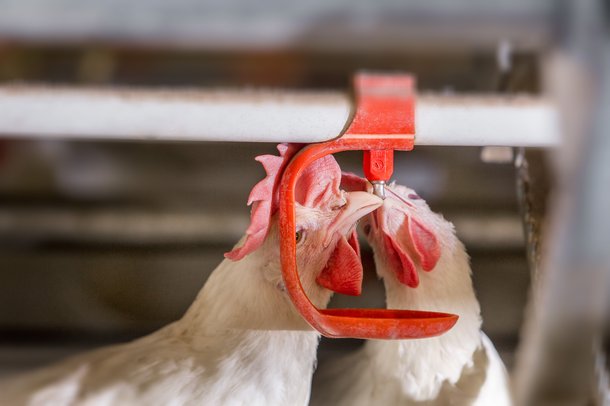
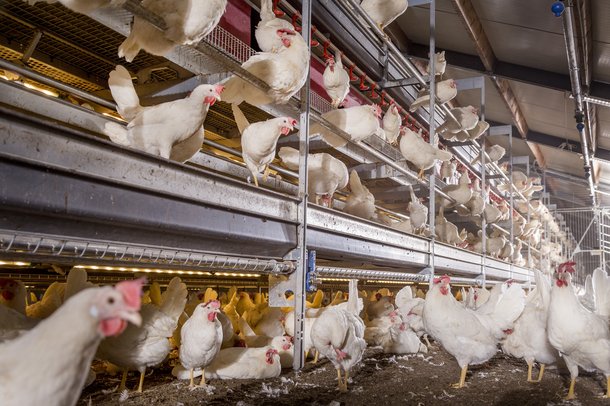
Environmental conditions within the aviary also play a critical role. High humidity levels, inadequate ventilation, and poor litter management can all contribute to the persistence of wet droppings. Leaks from drinker systems or poorly maintained water lines can saturate litter and create conditions where droppings do not dry properly. These environmental factors, when combined with poor system design, can result in droppings falling directly onto birds resting or moving below perches and tiers. System design modifications can lead to significant improvements. Installing manure belts or droppings trays beneath perches, adjusting tier spacing to prevent direct contact with droppings, and incorporating sloped surfaces to direct waste away from birds are all effective strategies. These changes not only reduce contamination but also improve overall system hygiene.
Management practices must also be taken in consideration. Overcrowding can increase stress and digestive upset, leading to wetter droppings. Infrequent cleaning of egg belts, lack of manure belt usage, and poorly spaced tiers can all contribute to the accumulation of droppings in areas where birds are active.
Ongoing monitoring and proactive management are essential. Regular fecal scoring and moisture assessments can help identify problems early. Staff training should emphasize the importance of spotting early signs of wet droppings.
Conclusion
The occurrence of wet and sticky droppings in laying hens is a multifactorial issue requiring integrated management across nutrition, housing, and husbandry. Electrolyte intake (particularly sodium, potassium, and chloride) must be carefully balanced to regulate water consumption and excreta moisture. Feed formulation should consider fiber type and level, protein content, and particle size to optimize gut function and manure consistency. Environmental factors such as humidity, ventilation, and system design directly influence litter condition and contamination risk. Additionally, water quality and microbiological parameters must be routinely monitored to support intestinal health. Effective control of manure moisture demands continuous observation, including fecal scoring and moisture tracking, combined with staff training and system adjustments. Especially in white egg layers and white-feathered breeds, where soiling is more visible, a structured and data-driven approach is essential to maintain feather hygiene, egg cleanliness, and system integrity.