Published on Nov. 9, 2025
Essentials of successful hatching egg production
A hatching egg can be defined as an egg that is presumably fertile, clean, of good quality, with a smooth eggshell, conventional shape, and shell colour matching the breed standard. It should be suitable for incubation and weigh between 52 and 70 grams. In addition to these visible traits, internal characteristics play a crucial role in successful incubation. These include the presence of essential nutrients such as amino acids, fats, minerals and vitamins, which support proper embryonic development. The egg must also be free from bacterial contamination and contain a blastoderm at a developmental stage of 30,000 to 60,000 cells.
In short, a hatching egg is not just an egg, it is a living structure, and producing it is a serious responsibility.
To ensure a hen produces a high-quality egg, proper management during rearing is essential. She must grow and develop smoothly through the starting, growing and development phases. For hatching eggs, the male counterpart must also be considered, as his presence ensures fertility. Both sexes require adequate space for living, feeding and drinking from the beginning. A well-developed skeletal frame is vital to accommodate internal organs necessary for reproduction. Feed quality, both in nutrient composition and physical structure, is a key parameter throughout the birds’ lives. Production traits such as egg number, persistency of lay and livability are closely linked to body weight at five weeks of age.
If males show early growth issues, they can be housed separately with more space and later integrated with females once they have achieved sufficient body frame and weight. This prevents them from being dominated during development. Flock uniformity during rearing and at transfer is another critical factor, closely tied to production performance. Uniformity must also be maintained during the laying phase, supported by sufficient space and high-quality feed.
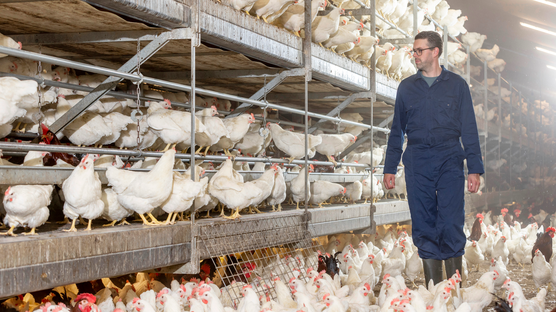
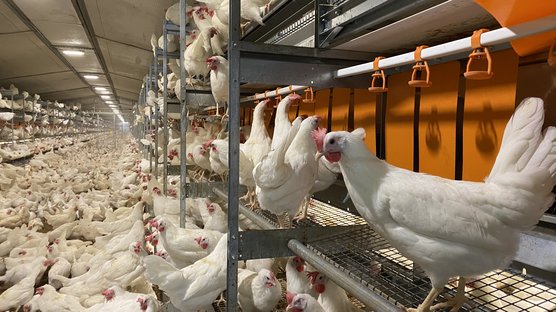
In cage systems for hatching egg production, two main setups are used: small cages with 2–3 hens and artificial insemination, or family cages housing 30–80 hens with an appropriate number of males. Adequate space for both sexes is essential, with special attention to cage height for males, allowing them to stretch, stand upright and mate successfully. A standard cage height of 70 cm is recommended.
Lighting programs also influence hatching egg production. A slow step-down lighting pattern during rearing is commonly used, gradually reducing daylength from 23 hours at housing to a plateau of around 12 hours by nine weeks of age. This plateau remains until light is extended at approximately 5% lay. This approach supports better growth, delays onset of lay and helps avoid small eggs unsuitable for incubation.
Female-to-male ratios vary by housing system. Smaller groups require more males: 3.5–4% for artificial insemination, 7–10% in barns or aviaries, and 10–14% in family cages. These ratios ensure fertility and account for potential male losses. In barns and aviaries, fewer males often result in calmer environments, reduced competition, better feather cover for females and improved mating behaviour. Only top-quality males should be selected for production in any system.