Published on June 22, 2026
New castle disease update outbreaks 2026: a technical review
Newcastle disease (ND) is re‑emerging as a major threat to poultry production across Europe. After several years of relatively limited commercial impact, a clear increase in confirmed outbreaks has been reported during 2025 and early 2026, affecting both intensive and extensive poultry systems in multiple EU Member States. This resurgence has led to substantial economic losses, large‑scale culling, and renewed concern regarding the effectiveness of current control strategies under modern European poultry production conditions.
ND, caused by avian paramyxovirus type 1 (APMV-11), remains one of the most consequential viral diseases in poultry, owing to its severe clinical outcomes and its severe impact on flock performance and egg production. While the virus is enzootic in many parts of the world, the recent European outbreaks underline that ND should not be regarded as a historical or regional problem, but as an ongoing and dynamic risk requiring continuous vigilance. ND continues to pose a major threat to poultry health and productivity.
Classification of ND viruses are based on their pathotypes and virulence, ranging from lentogenic strains causing mild respiratory or enteric infections to highly virulent velogenic strains capable of inducing severe systemic disease and high mortality. The current European outbreaks are predominantly associated with virulent genotype VII viruses, which are known for rapid spread and significant clinical impact, even in vaccinated populations.
This paper provides an updated technical overview of ND, with specific focus on transmission, clinical presentation, diagnostic approaches, control strategies, and the recent epidemiological developments in Europe. The aim is to support practical decision‑making by veterinarians and poultry producers through clear interpretation of current knowledge and field observations.
Transmission of Newcastle Disease virus
Virus transmission occurs primarily through direct contact with infected birds via faeces or respiratory secretions, but indirect spread through contaminated equipment, litter, water or personal is also common. This means that the virus can easily move between houses or farms via boots, crates, vehicles, egg trays, and shared equipment if hygiene barriers are not strictly applied.
Vertical transmission is considered unlikely because embryonic infection typically results in death before hatch; however, externally contaminated eggs may act as sources of infection for newly hatched chicks.
Although ND virus is susceptible to most disinfectants, it can remain viable for several weeks in organic material, facilitating persistence on farms.
Clinical signs and diagnoses of Newcastle Disease virus
The clinical presentation of ND varies widely and is influenced by viral pathotype, the immune status of the flock (vaccination programm), and the age of affected birds. Respiratory signs are frequently observed and include nasal discharge, conjunctivitis, coughing, gasping, and rales. Respiratory signs are often the first indicators noticed by farmers and may precede more severe systemic or neurological symptoms, especially in partially immune flocks.
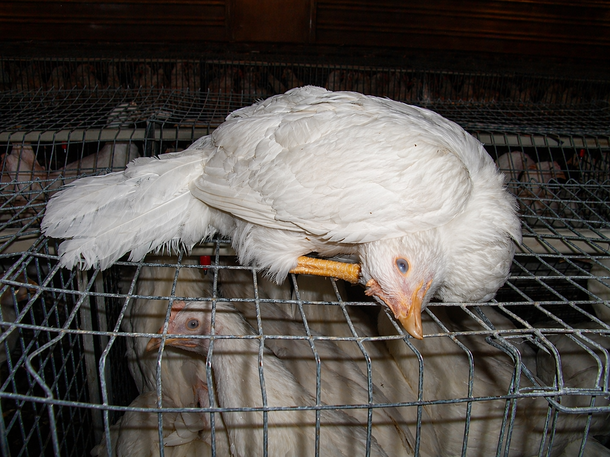
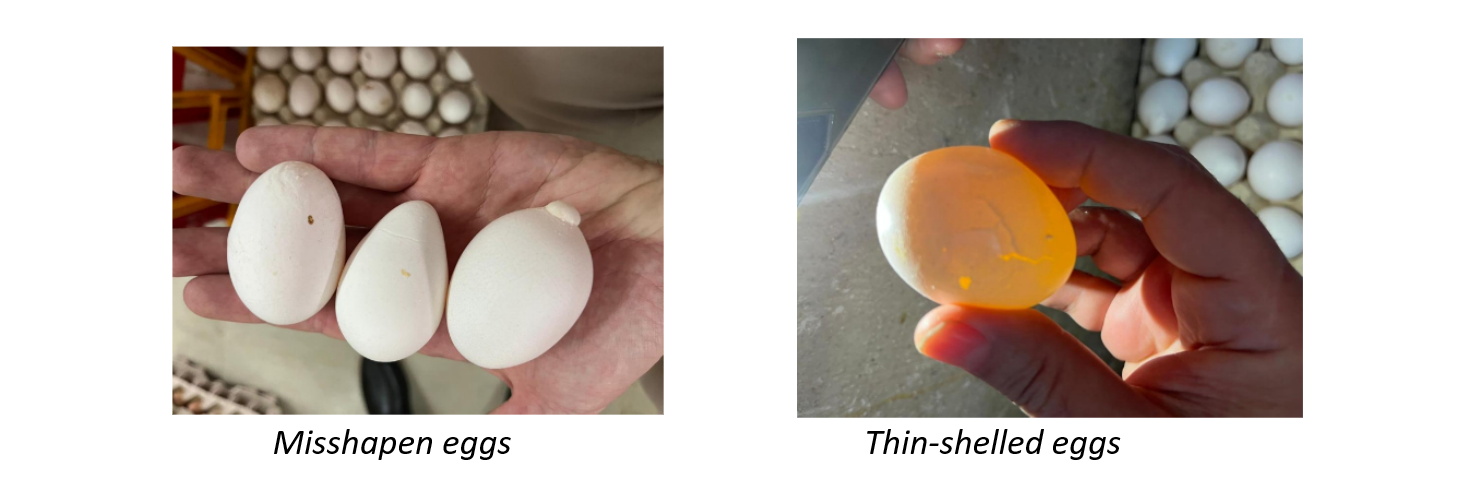
Neurotropic strains may induce tremors, paralysis, and torticollis, while greenish diarrhea is commonly reported. In laying hens, infection is often accompanied by a marked decline in egg production, and eggs may exhibit shell abnormalities such as thinning, roughness, depigmentation, or irregular shapes. In layer flocks, these changes may occur suddenly and can persist for several weeks, even in birds that appear clinically recovered.
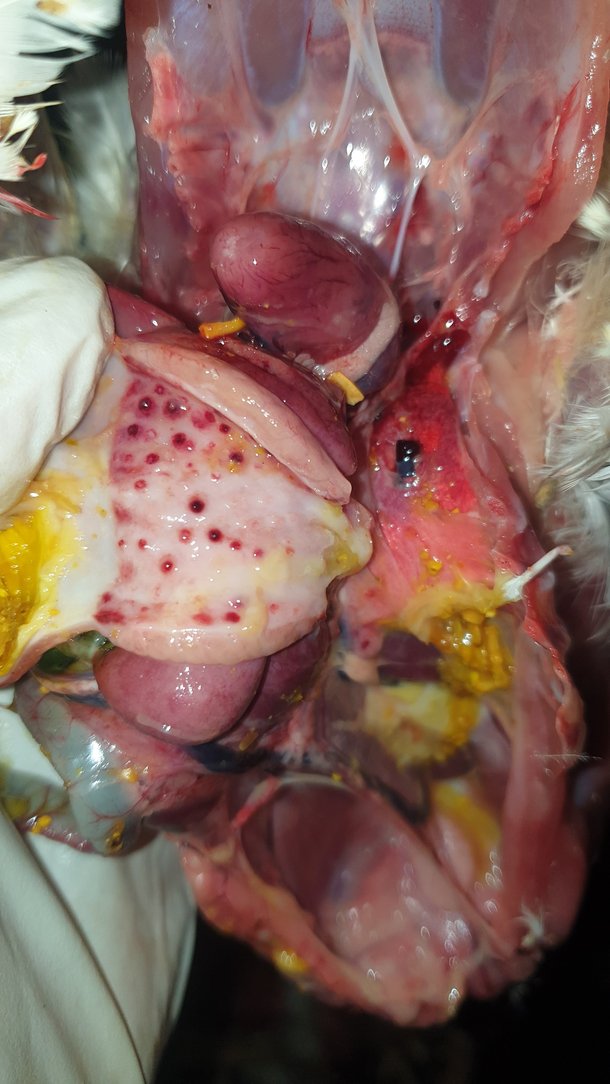
Pathological lesions are similarly variable. Respiratory disease is commonly associated with tracheitis, pneumonia, and airsacculitis, whereas infections with virulent strains can result in extensive hemorrhagic lesions affecting the intestinal tract, cecal tonsils, proventriculus gizzard junction, and ovaries.
As these lesions are not pathognomonic, this means that post‑mortem findings alone are not sufficient to confirm Newcastle disease and may resemble lesions caused by other infectious poultry diseases. Definitive diagnosis relies on laboratory confirmation. Virus detection by RT‑PCR or virus isolation is routinely applied, while serological assays, particularly hemagglutination inhibition (HI) testing, are valuable tools for assessing population immunity and vaccination responses.
Vaccination strategies
Vaccination remains a central pillar in Newcastle disease control, but its success depends critically on correct vaccine selection, timing, application, and adaptation to local field conditions. Live lentogenic vaccines are widely used to establish baseline immunity, whereas inactivated vaccines are commonly applied to enhance and prolong protective immunity, particularly in long‑living birds such as layers and breeders. Recombinant HVT‑based vaccines may be administered at hatch and provide early protection, but in areas with high infection pressure they generally require subsequent live vaccinations to achieve sufficient field immunity. As no single vaccination program is universally optimal, infection pressure, circulating virus genotype, production type, and regional epidemiology must all be taken into account. Importantly, while vaccination effectively reduces clinical disease and mortality, it does not fully prevent infection or viral shedding; clinically healthy but infected birds may therefore continue to contribute to virus circulation, especially under high challenge conditions. This underscores the importance of regularly reviewing vaccination programs based on serological monitoring, field observations, and outbreak dynamics, in close consultation with the local veterinarian, and reinforces the continued necessity of rigorous biosecurity measures.
Don’t underestimate the importance of good Biosecurity
Strict biosecurity remains indispensable for limiting Newcastle disease introduction and spread and should not be underestimated, even in well‑vaccinated flocks. The recent European outbreaks clearly demonstrate that indirect transmission via contaminated equipment, vehicles, footwear, visitors, catching crews, or shared materials can rapidly compromise multiple farms. Simple but consistently applied measures, such as controlled farm access, effective cleaning and disinfection procedures, separation of clean and dirty zones, dedicated clothing and equipment per house, and careful management of egg transport and dead bird disposal, are critical barriers against virus entry. Special attention should be given to biosecurity lapses during periods of increased activity or external pressure. Veterinarians play a key role in identifying weak points in farm biosecurity and supporting producers in translating theoretical protocols into practical, farm‑specific routines that are implemented every day.
Confirmed outbreaks in Europe
The resurgence of Newcastle disease in Europe during 2025 and early 2026 confirms that ND remains a persistent and evolving threat to poultry production, even in regions with long‑standing control programs and widespread vaccination. The scale and speed of recent outbreaks, particularly those associated with virulent genotype VII viruses, highlight the limitations of relying on vaccination alone and the critical importance of comprehensive disease prevention strategies.
Effective ND control requires a multifactorial approach that integrates robust biosecurity, well‑designed vaccination programs, continuous monitoring of flock immunity, and rapid diagnostic confirmation in cases of suspected infection. Vaccination remains a cornerstone for reducing clinical impact and mortality, but it must be supported by strict hygiene measures and awareness that vaccinated flocks can still become infected and shed virus.
The current epidemiological situation in Europe underscores the need for heightened vigilance, timely reporting, and close cooperation between farmers, veterinarians, laboratories, and authorities. Proactive risk assessment and early intervention are essential to limit virus spread, reduce animal losses, and protect the long‑term sustainability of European poultry production.
Outbreaks
Poland: in 2025 45 outbreaks confirmed on commercial farms, particularly impacting turkey operations, with a total of over 4.5 million birds affected.
Germany: Following 30 years without major incidents, outbreaks were confirmed in February 2026 spreading to at least 40 commercial and hobby farms by late March 2026.
Spain: Following a December 2025 outbreak, several outbreaks were confirmed in broiler farms in Valencia in early January 2026.
As of March 2026, the outbreaks are characterized by high mortality rates, necessitating mass culling of birds in affected areas. The outbreaks are largely attributed to the virulent genotype VII of the Newcastle disease virus.
Conclusion
The recent resurgence of Newcastle disease across Europe during late 2025 and early 2026 clearly shows that ND is not a problem of the past. It remains a real and present risk for all poultry farms, including well managed and vaccinated operations. The spread of virulent genotype VII viruses, and the fact that outbreaks can still occur in vaccinated flocks, underline an important message: vaccination alone is not sufficient to fully protect farms against ND.
Effective and sustainable control of Newcastle disease depends on a combination of measures that work together. A well adapted vaccination program is essential to limit clinical signs, production losses, and mortality, but it must be supported by strict and consistently applied biosecurity. Attention to farm hygiene, control of movements, and prevention of indirect transmission through people, equipment, and vehicles are just as important as the vaccine itself.
Early recognition of abnormal signs such as respiratory problems, sudden drops in egg production, changes in egg quality, or unexplained mortality, followed by rapid laboratory diagnosis, can make a critical difference in limiting spread within and between farms. Regular monitoring of flock immunity, combined with close communication between farmers and their veterinarian, helps to identify weaknesses in protection before problems escalate.
The current situation in Europe highlights the need for continued vigilance, prompt reporting of suspected cases, and close cooperation between poultry producers, veterinarians, laboratories, and authorities. By combining good biosecurity, smart vaccination strategies, and early action, the poultry sector can reduce the impact of Newcastle disease outbreaks and better protect flock health, farm continuity, and long term production sustainability.
Key take‑home messages for poultry farmers and egg producers
- Newcastle disease is back in Europe and can also affect well vaccinated flocks.
- Vaccination is essential, but it does not fully stop infection or virus spread.
- Good biosecurity every day is just as important as the vaccination program.
- Watch closely for early warning signs such as respiratory symptoms, sudden egg drop, or poor egg quality.
- Act fast: contact your veterinarian and confirm suspicions quickly with laboratory testing.
- Review vaccination programs regularly and monitor flock immunity, especially under high infection pressure.
- Close cooperation between farmers, veterinarians, laboratories, and authorities is key to limiting losses and spread.